

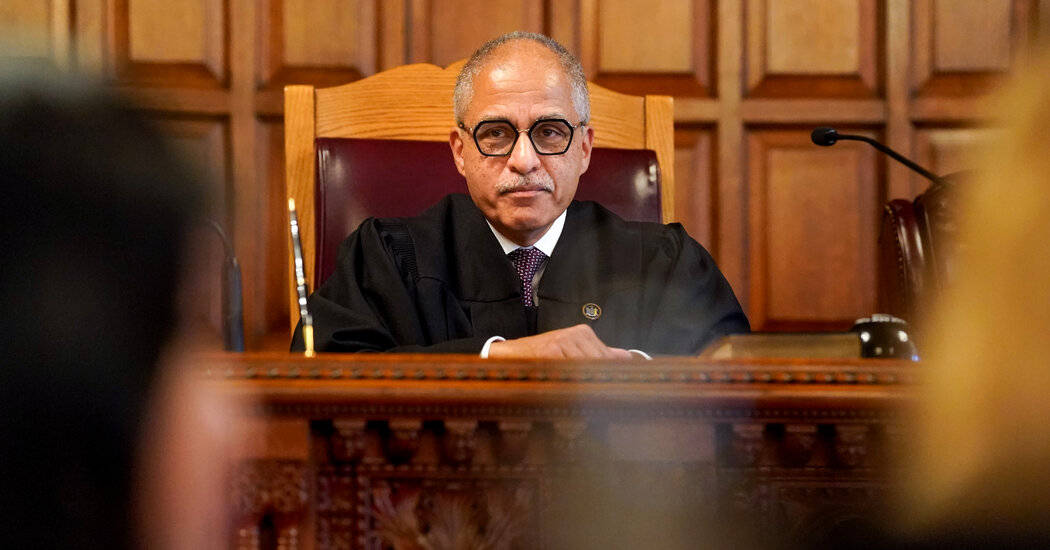
New York needs more resources to address issues like mental illness and housing to help reduce the number of cases that enter the family court system, which is often tasked to address cases it is not designed to handle, the state’s top judge said on Monday.
The judge, Rowan D. Wilson, who oversees the state’s entire court system, said that the conditions that land families in legal trouble are often complex problems like mental illness, physical illness, violence, poor health and nutrition, inadequate medical care and housing instability. Many of those issues are rooted in poverty, and courts are not equipped to help families navigate them, Judge Wilson said.
“If we had a magic wand we should use it to eliminate Family Court entirely by eliminating all the problems families have,” he said. “But that isn’t possible, because the root causes of the distress that families, parents and children have are not created by the courts, but are fomented elsewhere.”
In his speech at the Court of Appeals in Albany, N.Y., Judge Wilson acknowledged the additional funding that the state legislature and Gov. Kathy Hochul had allocated to family courts in recent years. New funding helped create 29 new Family Court judgeships, hire new magistrates and increase nonjudicial staffing by 21 percent, he said. Judges also receive training on how to weigh trauma when deciding a case, Judge Wilson said.
The state’s preliminary budget that the governor announced last month asked for five new family court mental health parts across the state. For now, Judge Wilson called for more resources for the courts to help families navigate these issues in the short run. But in the long run, he said, the state needs to invest in things like Gov. Hochul’s proposal for universal pre-K to reduce the problems families experience.
Once a family is enmeshed in family court, a 2024 report from the New York State Senate found that they were up against “Kafka-esque” dilemmas with life-changing consequences. The courts and attorneys “have faced unacceptably burdensome caseloads, litigants have faced unnecessary delays, and resources have been unjustifiably withheld,” the report said.
Source link